



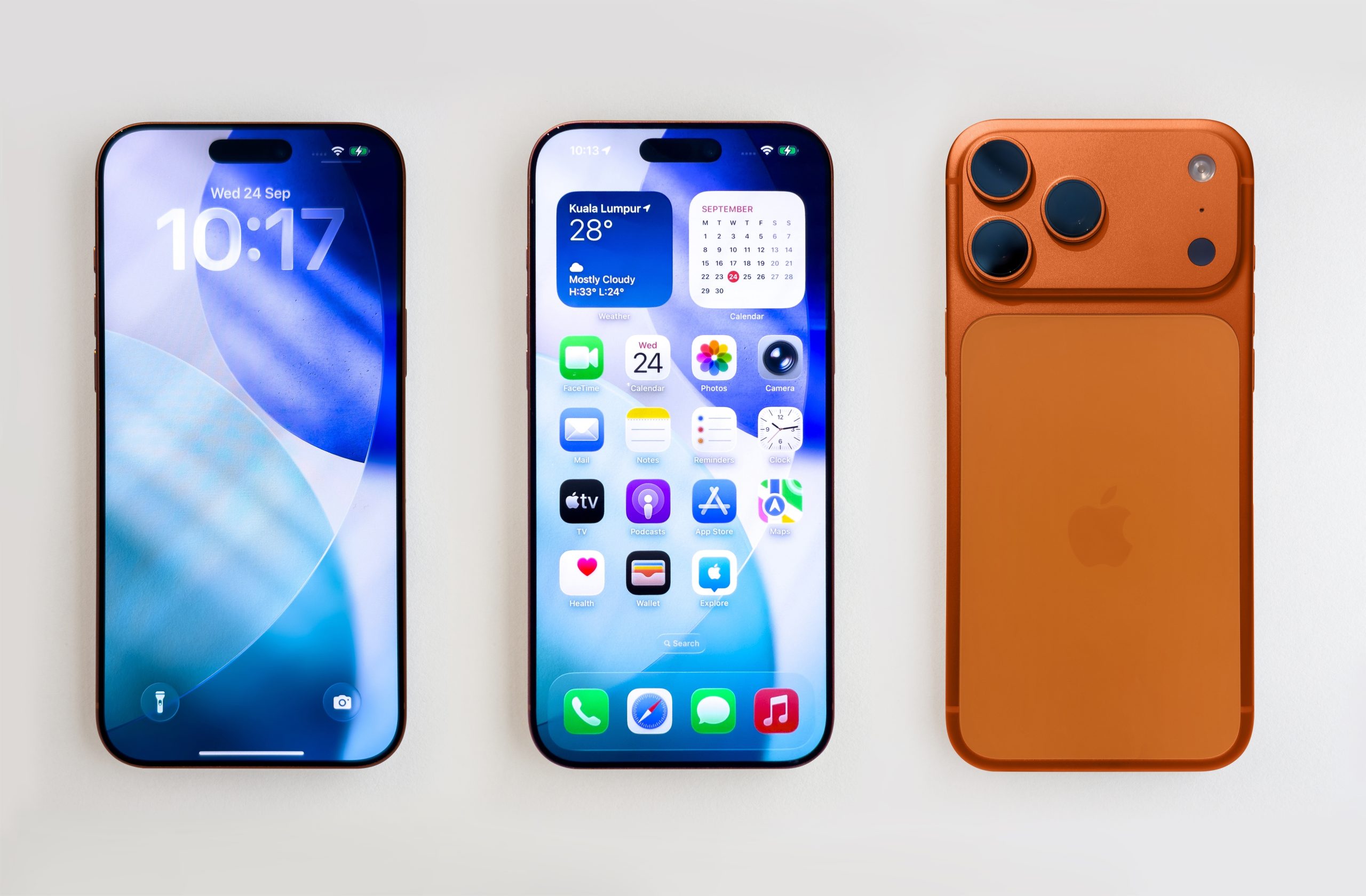
Surging iPhone demand lifted Apple’s revenue during the July–September quarter, closing its fiscal year with record profits. Apple posted stronger-than-expected results despite facing a global trade war and lagging behind its Big Tech rivals in the artificial intelligence race.
The company credited the impressive performance to brisk demand for the new iPhone 17 lineup, released last month. Tim Cook, Apple’s CEO, announced that Apple achieved a September quarter revenue record of $102.5 billion, with record-breaking figures for both iPhone and Services.
Driven by iPhone success, Apple earned $27.5 billion (€23.8bn), nearly doubling last year’s profit. After the announcement, Apple’s stock climbed 2% in extended trading.
Although the iPhone 17 lacks the advanced AI tools found in rival devices from Samsung and Google, Apple refreshed its models with a sleek “liquid glass” design. The company kept prices mostly steady despite U.S. tariffs on devices made in India and China, which cost Apple $1.1 billion (€950m) this quarter and may reach $1.4 billion (€1.2bn) next quarter.
Strong consumer interest, especially in the U.S. and Europe, pushed iPhone sales to $49 billion (€42.4bn) for the July–September period, a 6% increase from last year. Analysts had predicted 8% growth, following a 13% rise in the prior quarter.
Ben Barringer, global head of technology research at Quilter Cheviot, noted that “Mac sales jumped 12%, iPhone sales rose 6%, while iPad and wearables stayed flat.” He pointed out that “China’s weak demand dragged results, with sales down 4% due to forecasting errors and supply limits.” IDC estimated that Apple sold 58.6 million iPhones in the quarter, trailing Samsung’s 61.4 million Android sales.
For the fiscal year ending in September, Apple reported a record net income of $112 billion (€96.8bn), up 20% from the prior year.
Holiday Outlook Brightens Apple’s Sales Forecast
During a call with analysts, Tim Cook said he expects the iPhone 17 lineup to perform strongly in the holiday season. Chief financial officer Kevan Parekh forecasted iPhone sales to rise at least 10% from last year’s holiday period, with total revenue climbing at a similar pace.
“Apple’s Q1 guidance of 10–12% revenue growth looks strong heading into Christmas, fueled by iPhone 17 demand,” said Barringer.
Investors Weigh Apple’s AI Gap and Market Value
Apple’s shares soared after data from International Data Corp. suggested record iPhone sales in the quarter. The rally pushed Apple’s market value past $4 trillion for the first time and set the stage for another possible record high in Friday’s session.
However, Apple still trails in the AI race. Nvidia, whose chips power many AI systems, recently became the first $5 trillion company. Apple promised extensive AI features for last year’s iPhones but delivered only a few. The improved Siri update remains delayed until next year.
Barringer questioned whether Apple can keep attracting investors, noting that “uncertainty in China and faster-growing rivals like Microsoft and Nvidia may steer investors elsewhere.”
Still, Apple has often started late in emerging technologies before taking the lead. Wedbush Securities analyst Dan Ives predicted that if Apple successfully integrates AI across its devices, it could boost market value by $1 trillion (€860bn) to $1.5 trillion (€1.3tr), or $75–$100 per share.
