



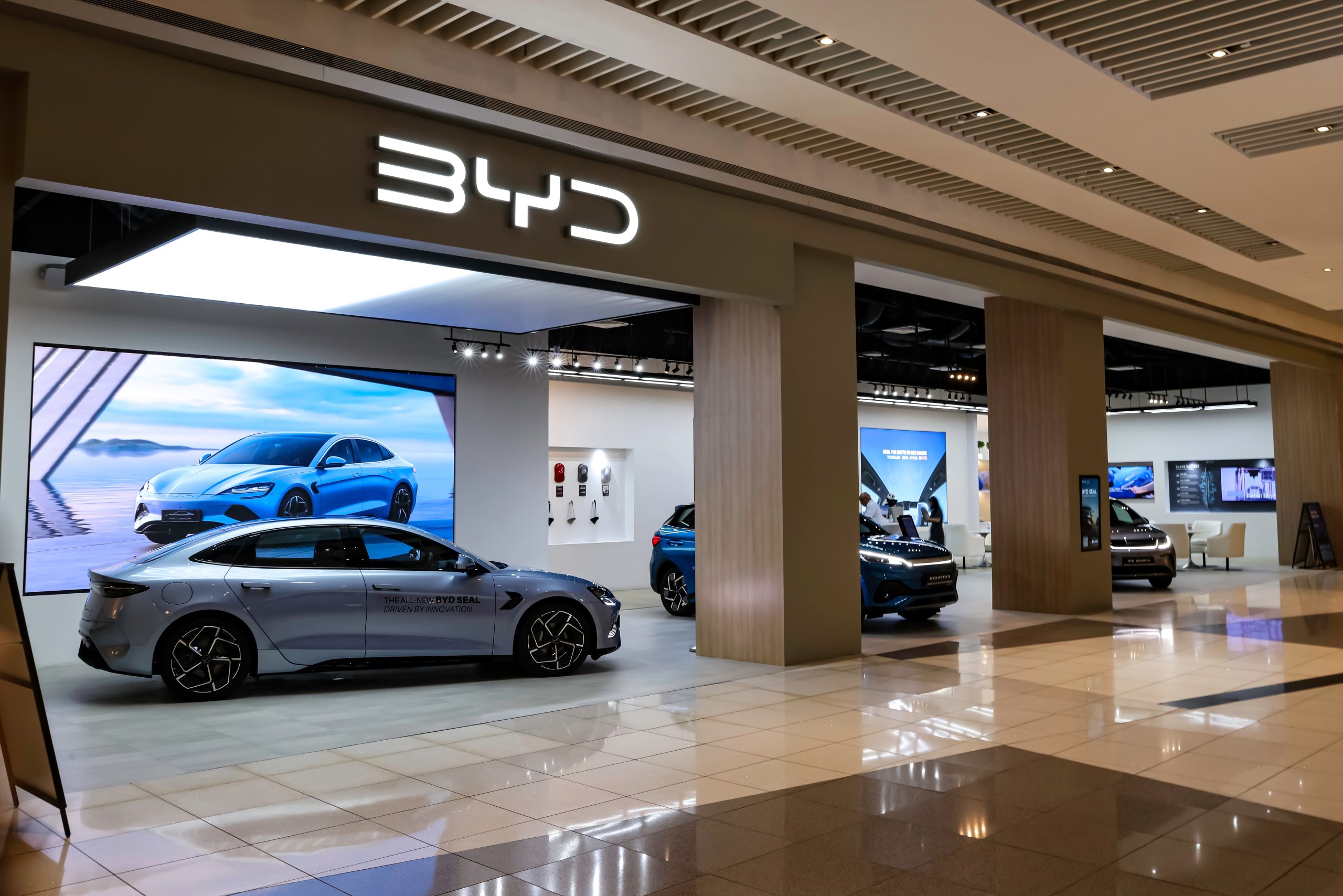
Shares of Chinese electric vehicle maker BYD dropped by as much as 8% on Monday. The fall came after the company reported a sharp decline in quarterly profit, hit by a bruising price war in China’s car industry.
Profit sinks amid intensifying competition
On Friday, BYD disclosed that its net profit fell to 6.4bn yuan ($900m; £660m) between April and June. That marked a 30% drop compared to the same period last year. The firm stated in its filing that “increased price competition” across China’s EV brands had taken a toll on the sector.
A crowded and aggressive market
The Shenzhen-based group is battling against local rivals such as Nio and XPeng, alongside US carmaker Tesla. All competitors have slashed prices in recent months to attract cost-conscious buyers. BYD’s stock opened weaker in Hong Kong on Monday but recovered some ground during the day.
Competition in China’s car sector has reached what BYD described as “fever pitch”. The company also criticised “industry malpractices” like excessive marketing, which it said disrupted the market. EV makers have resorted to subsidising dealers and offering zero-interest loans, deepening the struggle for margins.
Beijing urges restraint on discounts
Authorities in Beijing have warned automakers to stop aggressive price cuts, fearing damage to the wider economy. Average car prices in China have fallen by about 19% over the past two years. Current prices stand around 165,000 yuan ($23,100; £17,100), according to industry data.
Despite strong overseas sales, BYD’s latest results fell short of analyst expectations. Analysts had predicted a modest profit increase, but the company instead posted a disappointing decline.
Ambitious goals under pressure
The company had set a target of 5.5 million global sales for this year. By the end of July, however, it had sold only 2.49 million vehicles. Industrial policy expert Prof Laura Wu from Nanyang Technological University in Singapore called BYD’s performance “surprising”. She said it showed that even the sector’s leader is vulnerable in a “cut-throat” price war.
Wu added that the morning drop in share value reflected clear investor disappointment. She also noted that Beijing faces difficulty in cooling the EV battle. Past industrial policies encouraged too many players to enter the market. Price cuts may delight consumers now but risk creating long-term oversupply of Chinese EVs, she warned.
Analysts see a temporary setback
Investment expert Judith MacKenzie of Downing Fund Managers stressed the setback should not be viewed too negatively. She argued that BYD had risen so quickly that “a bump in the road” was inevitable.
BYD has grown into the world’s largest EV producer, surpassing Tesla in annual revenue in 2024. The success came from strong demand for its hybrid models in China, other Asian markets, and Europe.
